

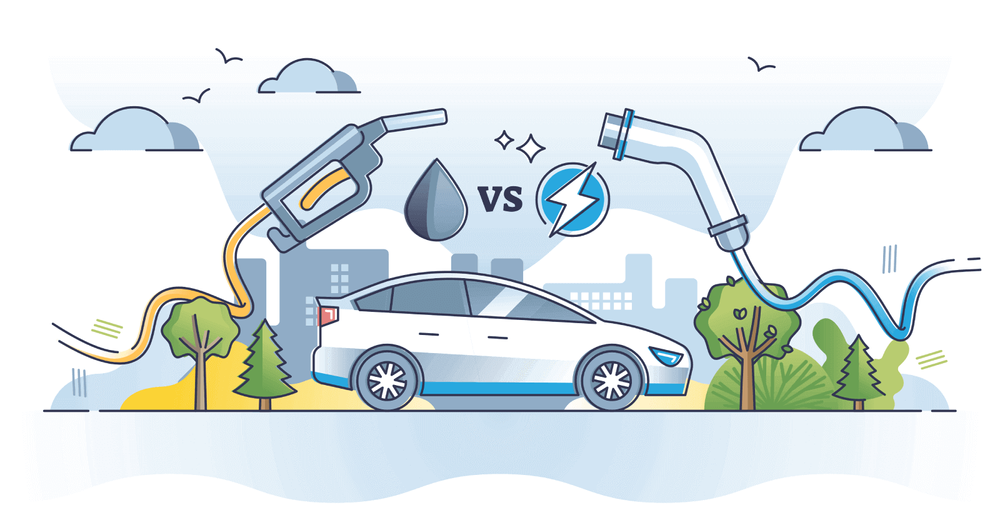
Everyone’s got an opinion on whether electric cars are actually cheaper to run, but very few people sit down and do the actual math. So I did — comparing a mid-size electric car with an equivalent petrol car doing the same monthly kilometers, to get a real electric car running cost vs petrol picture for 2026.
Spoiler: the numbers surprised even me, and I went in expecting EVs to win easily.
The Basic Cost Comparison
Quick answer: For a car doing 1,500 km per month, an electric car typically costs ₹1,200-1,800 in electricity, while a comparable petrol car costs ₹8,000-10,000 in fuel — a monthly saving of roughly ₹7,000-8,000 with an EV.
Breaking Down the Numbers
Let’s take the Tata Nexon (petrol) versus the Tata Nexon EV as a fair comparison, since they’re built on similar platforms.
Petrol Nexon:
- Mileage: ~17 kmpl
- Petrol price: ₹105/litre (approx, varies by state)
- Cost per km: ~₹6.2
- Monthly cost (1,500 km): ~₹9,300
Nexon EV:
- Efficiency: ~6 km per unit (kWh)
- Home electricity cost: ~₹8/unit (varies)
- Cost per km: ~₹1.3
- Monthly cost (1,500 km): ~₹1,950
That’s a difference of over ₹7,000 per month, which adds up to nearly ₹85,000 a year just in fuel/charging costs.
But What About Purchase Price?
Here’s the part people often gloss over. Electric cars still cost ₹2-4 lakh more than their petrol equivalents at purchase. So the real question isn’t just monthly running cost — it’s the breakeven point.
Doing rough math: if you save ₹7,000/month on fuel, it takes roughly 3-4 years of regular driving (15,000+ km annually) to fully offset that higher upfront cost. If you drive less, that breakeven point stretches out further.
Maintenance Cost Comparison
EVs generally have lower maintenance costs too — no engine oil changes, fewer moving parts, no clutch or gearbox issues. Owners typically report 30-40% lower servicing costs over 3 years compared to petrol equivalents. [Link to our EV charging stations guide here]
Resale Value: The Wildcard Factor
This is honestly still uncertain. EV battery degradation concerns affect resale value more than petrol car depreciation does, though this is improving as battery technology matures and warranties extend to 8 years in many cases.
Who Should Actually Choose an EV Right Now?
- High daily mileage drivers (15,000+ km/year) — EVs make clear financial sense
- Urban dwellers with home charging access — practical and cost-effective
- Occasional long-distance travelers dependent on unreliable highway charging — might still want to wait or keep a petrol car as backup
FAQs
Q1. Is an electric car really cheaper than petrol in the long run? Yes, for high-mileage drivers, the fuel/electricity savings typically offset the higher purchase price within 3-4 years.
Q2. How much does it cost to fully charge an electric car at home? For a mid-size EV with a 30-40 kWh battery, expect ₹250-350 for a full home charge.
Q3. Do electric cars need less maintenance than petrol cars? Yes, generally 30-40% lower maintenance costs due to fewer mechanical components.
Q4. Is the resale value of electric cars good in India? It’s improving but still less predictable than petrol cars due to battery degradation concerns.
Q5. What is the breakeven point for buying an EV over petrol? Typically 3-4 years for drivers doing 15,000+ km annually; longer for lower-mileage drivers.
Conclusion
Numbers don’t lie — if you drive a lot and have home charging access, an electric car will very likely save you real money over a few years. But if your annual mileage is low, or you rely heavily on long highway trips, the math becomes a lot less clear-cut. Do your own breakeven calculation based on your actual driving pattern before deciding. [Link to our upcoming car launches 2026 article here]
Alt text suggestions:
- “Electric car vs petrol car running cost comparison chart”
- “Tata Nexon and Nexon EV side by side comparison”
- “Home EV charging cost calculation”
 P1
P1 P2
P2