

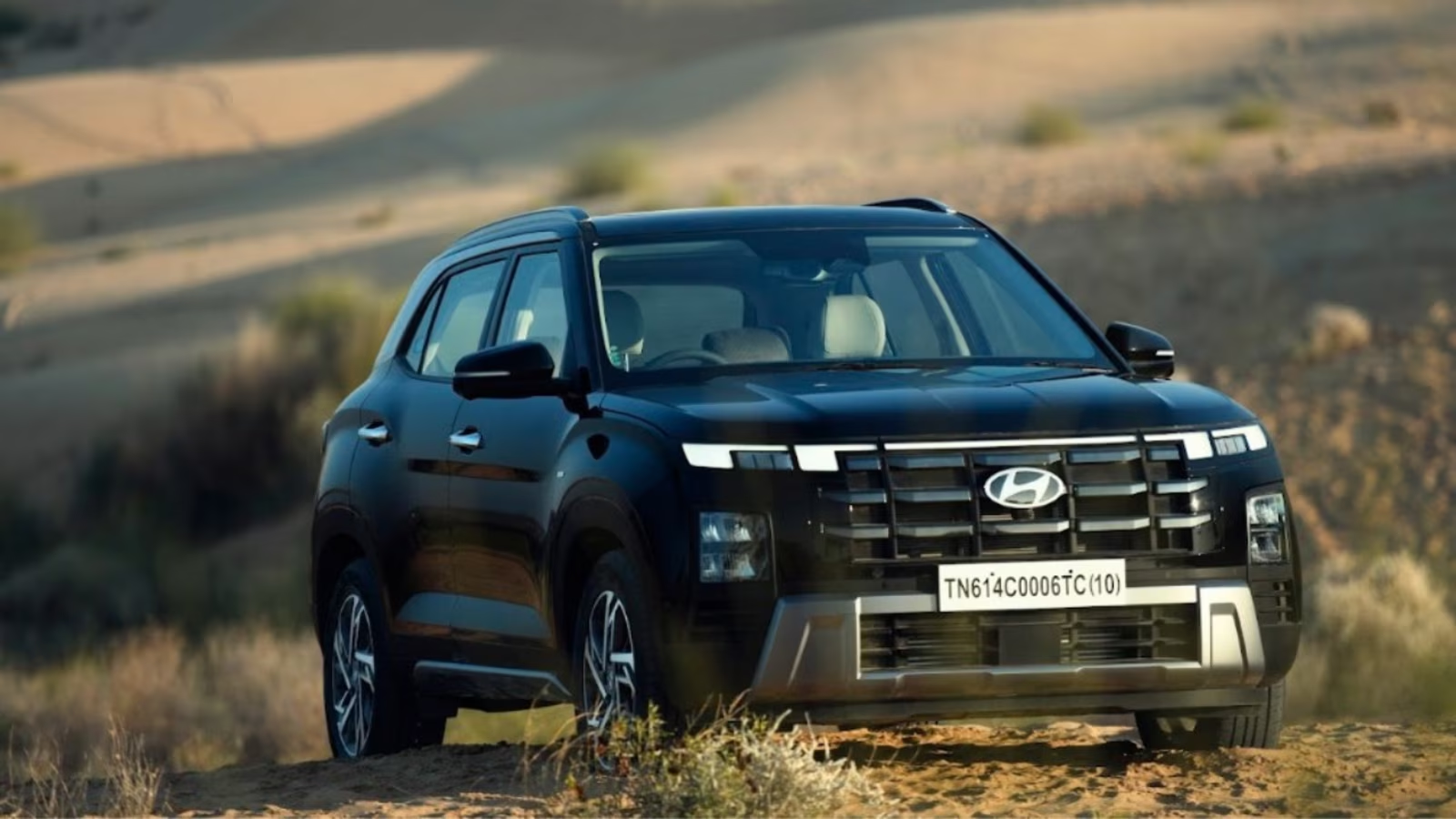
The Creta has been India’s favorite mid-size SUV for years now, and the 2026 facelift had a lot to prove — mainly, whether the changes are meaningful or just cosmetic tweaks to justify a price hike. After spending a few days with it, here’s my honest Hyundai Creta 2026 review.
First Impressions: What’s Actually New?
Quick answer: The 2026 Hyundai Creta facelift brings updated LED lighting, a larger touchscreen, added ADAS safety features, and mild engine refinements — meaningful upgrades rather than just cosmetic tweaks, though the core design remains largely familiar.
Exterior Design Changes
The front fascia gets a bolder grille and updated LED DRLs that genuinely modernize the look. From the side and rear, though, changes are minimal — you’d need to look closely to spot the difference from the previous generation.
Interior and Features
This is where Hyundai has actually put in real effort. The updated dashboard feels more premium, and the larger touchscreen is noticeably more responsive than the outgoing model’s unit. Ventilated seats, a panoramic sunroof, and a better sound system round out the upgrade.
Engine and Performance
Under the hood, engine options remain largely carried over — the 1.5L petrol, 1.5L diesel, and turbo-petrol options. Performance figures haven’t changed dramatically, but Hyundai has tweaked throttle response for a marginally smoother drive experience in city conditions.
Safety Features: A Genuine Step Up
The addition of ADAS (Advanced Driver Assistance Systems) on higher variants is arguably the biggest practical upgrade — features like adaptive cruise control, lane-keep assist, and forward collision warning weren’t available on earlier Creta variants at this price point.
Ride Quality and Handling
I drove it on a mix of city roads and a short highway stretch. The suspension setup feels slightly firmer than before, which helps highway stability but transmits a touch more road noise on rough city patches.
Pricing: Is It Worth the Premium?
The facelift comes with a price increase of roughly ₹40,000-60,000 over the outgoing model, depending on variant. Given the added safety tech and interior upgrades, I’d say it’s justified — but only if you’re specifically drawn to those features. [Link to our SUV comparison guide here]
How Does It Compare to Rivals?
Against competitors like the Kia Seltos and Skoda Kushaq, the Creta still holds its ground primarily due to Hyundai’s strong resale value and widespread service network, even if some rivals offer marginally sportier driving dynamics.
FAQs
Q1. Is the 2026 Hyundai Creta facelift worth buying over the older model? Yes, primarily due to added ADAS safety features and interior upgrades that genuinely improve the ownership experience.
Q2. What engine options are available in the new Creta? 1.5L petrol, 1.5L diesel, and a turbo-petrol option, largely carried over with minor refinements.
Q3. Does the new Creta have ADAS features? Yes, higher variants now include adaptive cruise control, lane-keep assist, and forward collision warning.
Q4. How much more expensive is the 2026 facelift compared to the older model? Roughly ₹40,000-60,000 more, depending on the variant chosen.
Q5. Is the Creta better than the Kia Seltos in 2026? Both are strong competitors; the Creta edges ahead in resale value and service network, while the Seltos offers marginally sportier handling.
Conclusion
The 2026 Hyundai Creta facelift isn’t a dramatic reinvention, but the safety and interior upgrades genuinely add real-world value rather than being superficial changes. If you’re upgrading from an older Creta or cross-shopping in this segment, it’s worth a serious test drive before deciding. [Link to our upcoming car launches 2026 article here]
Alt text suggestions:
- “Hyundai Creta 2026 facelift front view”
- “Hyundai Creta 2026 interior dashboard and touchscreen”
- “Hyundai Creta 2026 rear LED lighting close-up”
 P1
P1 P2
P2