

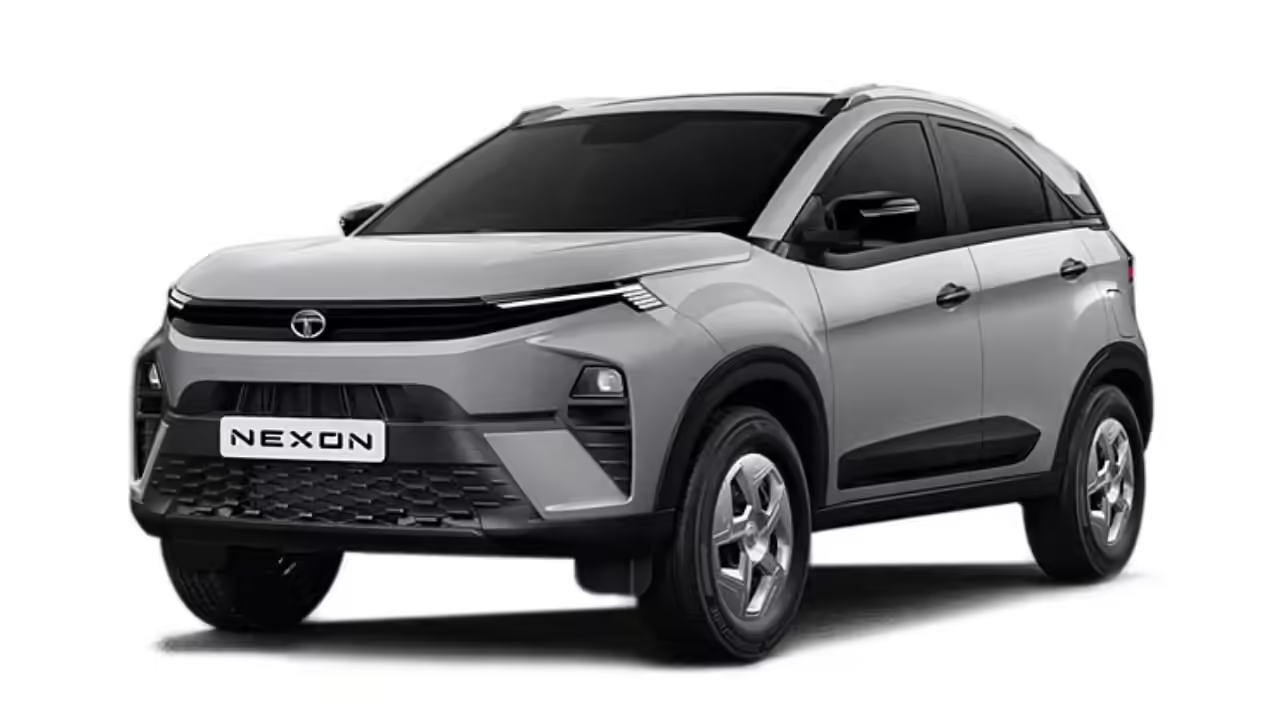
A close friend of mine bought the Tata Nexon EV review worthy long-termer about a year ago, and I’ve ridden in it enough times — plus borrowed it for a couple of weekend trips — to have a genuinely informed opinion on how it holds up beyond the showroom test drive.
Spoiler: it’s not perfect, but it’s a lot more livable day-to-day than I expected going in.
First Impressions vs Long-Term Reality
Quick answer: After a year of ownership, the Tata Nexon EV delivers a real-world range of 250-280 km (against a claimed 325 km), reasonably reliable performance, but occasional software glitches that Tata is still ironing out through updates.
Range: What You Actually Get
Tata claims 325 km on a full charge (long-range variant). In real mixed city and highway driving, my friend consistently gets 250-280 km, dropping to around 220 km with AC running heavily in summer. That’s a meaningful difference from the claimed figure, but honestly in line with what most EVs deliver versus their brochure numbers.
Charging Experience
Home charging with the standard charger takes about 8-9 hours for a full charge, which works fine overnight. Public fast charging (where available) gets it to 80% in around 55-60 minutes — decent, though not class-leading.
Interior and Build Quality
The cabin feels genuinely upmarket for the price — soft-touch materials, a functional touchscreen, and decent fit and finish. If I’m being picky, the rear seat under-thigh support could be better for taller passengers.
Performance and Driving Experience
This is where the Nexon EV genuinely shines. Instant torque means it feels quicker than its numbers suggest, especially in city driving. Overtaking on highways doesn’t require the usual downshift-and-wait that petrol cars need.
Service Experience: The Good and the Frustrating
Tata’s EV service network has expanded, but it’s still thinner than their petrol/diesel network. My friend had one instance where a minor software glitch (dashboard display freezing) took nearly 4 days to resolve because the nearest EV-trained technician was in another city.
Running Costs After 12 Months
Over the year, total charging costs came to roughly ₹18,000 for around 14,000 km driven — compare that to an estimated ₹75,000+ in fuel costs for an equivalent petrol Nexon over the same distance. [Link to our electric car running cost comparison here]
Would I Recommend It?
Honestly, yes — with a caveat. If you have reliable home charging and mostly drive within city limits with occasional highway trips, the Nexon EV genuinely delivers. If you’re someone who does frequent long-distance highway driving without predictable charging stops, you might find it more stressful than convenient.
FAQs
Q1. What is the real-world range of the Tata Nexon EV? Around 250-280 km in mixed driving conditions, lower than the claimed 325 km figure.
Q2. Is the Tata Nexon EV reliable after a year of use? Mostly yes, though occasional software-related glitches have been reported by owners.
Q3. How much does it cost to fully charge the Nexon EV at home? Approximately ₹250-300 for a full home charge, depending on local electricity rates.
Q4. Is Tata’s EV service network good? It’s improving but still less widespread than their petrol/diesel service network, especially in smaller towns.
Q5. Is the Tata Nexon EV worth buying in 2026? For city-focused drivers with home charging access, yes — it remains one of the more practical electric SUVs in its price range.
Conclusion
A year of real ownership tells a more nuanced story than any showroom test drive ever could. The Tata Nexon EV isn’t flawless, but for the right use case — city driving with occasional highway trips — it delivers genuine value and a noticeably lower running cost. Just go in with realistic range expectations rather than trusting the brochure figure blindly. [Link to our EV charging stations guide here]
Alt text suggestions:
- “Tata Nexon EV exterior side profile”
- “Tata Nexon EV charging port close-up”
- “Tata Nexon EV interior dashboard review”
 P1
P1 P2
P2